AWA Request for the dissolution of the AMU “Arab Maghreb Union”
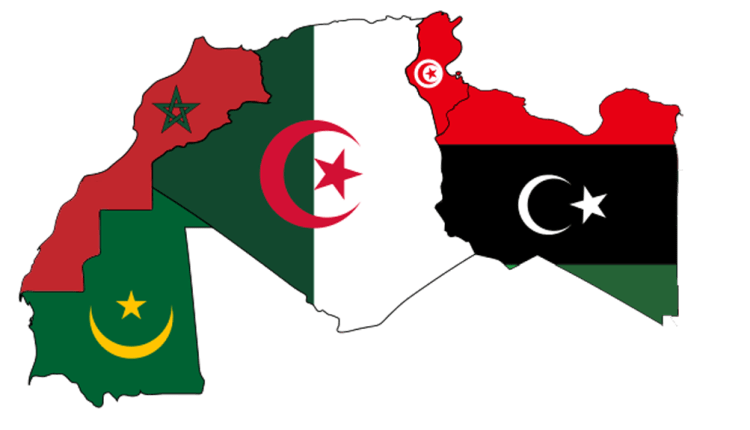
To the kind attention of Their Excellencies:
- Mr. Nasser Bourita, Minister of Foreign Affairs, African Cooperation and Moroccan Expatriates of the Kingdom of Morocco;
- Mr. Ahmed Attaf, Minister of Foreign Affairs of the People’s Democratic Republic of Algeria;
- Mr. Mohamed Salem Ould Merzoug, Minister of Foreign Affairs, Cooperation and Mauritanians Abroad of the Islamic Republic of Mauritania;
- Mr. Mohamed Ali Nafti, Minister of Foreign Affairs, Migration and Tunisians Abroad of the Republic of Tunisia;
- Mr. Taher al-Baour, Acting Minister of Foreign Affairs of the State of Libya.
Subject: Request for the dissolution of the “Arab Maghreb Union” (AMU) and proposal for the creation of the “Union of Tamazgha”
Excellencies, Gentlemen Ministers,
On the occasion of the thirty-seventh anniversary of the establishment of the “Arab Maghreb Union (AMU),” celebrated this Tuesday, 17 February, allow me to solemnly draw your attention to the future of this regional union, which has now become moribund and which, quite evidently, no longer inspires either popular support or political hope among the peoples of North Africa.
Despite repeated encouragement from the European Union — which has signed association agreements with Morocco, Algeria, and Tunisia, explicitly affirming “the encouragement of Maghreb integration by promoting exchanges and cooperation within the Maghreb as a whole and between it and the European Community and its Member States,” within the framework of the Euro-Mediterranean Barcelona Process launched in 1995 — regional Maghreb integration remains deeply hindered, paralyzed by structural, political, and ideological blockages.
The manifest failure of the AMU can be explained by multiple factors. I will confine myself here to presenting three of the most decisive.
First, this union was built upon the denial of the millennia-old history and the authentic Amazigh-African identity of North Africa, by adopting a reductive and inappropriate designation: “Arab Maghreb.” This designation is neither inclusive nor unifying, nor does it respect the identity, cultural, and historical plurality of North African peoples.
Second, the AMU is essentially based on an imported, artificial, and imposed ideology — Arab-Islamism — which is today in clear decline. The 35th edition of the Africa Cup of Nations 2025, recently hosted by Morocco, offered a telling illustration of this reality. A total absence of solidarity among North African supporters was evident: Moroccan fans supporting the teams of Congo or Nigeria against Algeria; Algerian and Tunisian supporters openly expressing satisfaction following the Moroccan team’s defeat in the final against Senegal; or even the enthusiasm of Moroccan supporters at Nigeria’s victory over Egypt — a country where Gamal Abdel Nasser had once elevated Arab ideology to the rank of a state religion. These behaviors definitively reflect the collapse of the myth of a unifying Arab brotherhood and of the myth of the “Arab nation.”
Third, there is the persistent obsession of the Algerian generals — the true holders of power — who, for more than five decades, have sought to artificially create a sixth so-called “Arab” state within the Moroccan Sahara, in total contradiction with historical, political, and geographical logic. This policy has led to the suffocation of the Algerian economy and the severing of diplomatic relations with Morocco, thereby contributing to the complete paralysis of the AMU.
Taken together, these factors have transformed this regional union into an empty shell, from its creation in Marrakech on 17 February 1989 to the present day.
Excellencies, Gentlemen Ministers,
In light of United Nations Security Council Resolution 2797, adopted on 31 October 2025, which enshrines the Moroccan autonomy plan presented in 2007 as “the most realistic and credible basis” for achieving a definitive settlement of the Saharan dispute — a resolution that Algerian officials were compelled to acknowledge during the Madrid meeting, under U.S. impetus, on 8 February — I solemnly invite you, in your capacity as Ministers of Foreign Affairs of the North African states, to formally acknowledge the dissolution of the AMU and to engage in a serious, clear-sighted, and courageous reflection on the reconstruction of a new regional union.
This new union should be founded on realistic and pragmatic bases, consistent with the profound values of our peoples, drawing inspiration from an Africanist and pan-Amazigh vision, while definitively freeing itself from Arab-Islamist ideological considerations that have now become obsolete.
The objective is to establish the “Union of Tamazgha,” modeled on the European Union, by drawing on the millennia-old history of North Africa and on recent archaeological discoveries. This union should be fully consistent with the Universal Declaration of Human Rights of 10 December 1948, as well as with the United Nations Declaration on the Rights of Indigenous Peoples of 13 September 2007. It would make the rights of women, the fight against all forms of discrimination, respect for ethno-linguistic diversity, the plurality of religious beliefs, and political pluralism its absolute priorities.
Given that Morocco and Algeria recognized the official status of the Amazigh language in 2011 and 2016 respectively, and that both have reconciled with their Amazigh millennia-old history by recognizing the Amazigh calendar — Algeria in 2018 and Morocco in 2023 — this regional union of North Africa should also move toward the establishment of a federal political system, based on broad regional autonomy, inspired by the ancient indigenous socio-political institutions of our tribal confederations, in accordance with the spirit of the “Manifest of Tamazgha *.”
Such a federal model — similar to the Moroccan autonomy proposal of 2007 for the Western Sahara, recently reinforced by Resolution 2797 — would make it possible to definitively resolve the issue of the Moroccan Sahara, to neutralize separatist aspirations in Kabylia, and to put an end to civil and intertribal conflicts in Libya. It would thus open the way to a new regional dynamic capable of responding to the legitimate expectations of our peoples.
In conclusion, recalling the famous maxim of the Amazigh pan-African leader Massinissa — “Africa for Africans” — we call upon you to fully recognize the African and Amazigh foundations of all North African countries. We appeal to your sense of responsibility, your spirit of openness, and your historical duty in order to mobilize all your diplomatic influence to refound the “Union of Tamazgha” and to reconcile us durably with our shared history.
To paraphrase the statement made by His Majesty King Mohammed VI on the occasion of the recognition of the Amazigh New Year, May 3, 2023, it is important to strongly affirm that Amazigh identity, as an essential component of the authentic North African identity, enriched by the plurality of its tributaries, constitutes a common heritage for all North Africans without exception.
Please accept, Excellencies, Gentlemen Ministers, the expression of our highest consideration.
Rachid Raha, President of the Amazigh World Assembly
[*]- https://amamazigh.org/wp-content/uploads/2018/10/AMA_MANIFESTE-DE-TAMAZGHA_5-langues.pdf
Les commentaires sont fermés.