The World Amazigh Assembly calls on the Amazigh people to engage in building the “Union of Tamazgha”
FINAL DECLARATION OF THE ELEVENTH WORLD ASSEMBLY OF AMAZIGHS (BERBERS)
The World Amazigh Assembly calls on the Amazigh people to engage in building the “Union of Tamazgha”
Rabat, 6–7 November 2026 / 2976
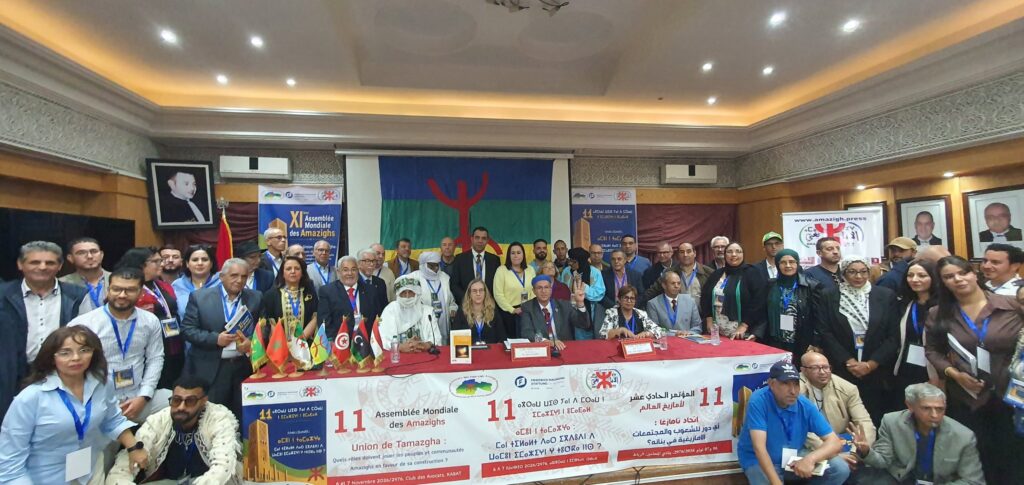
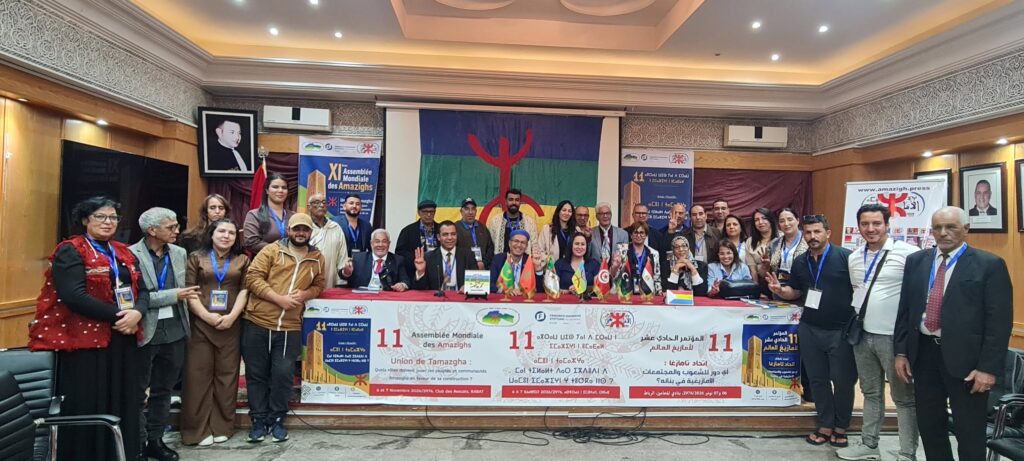
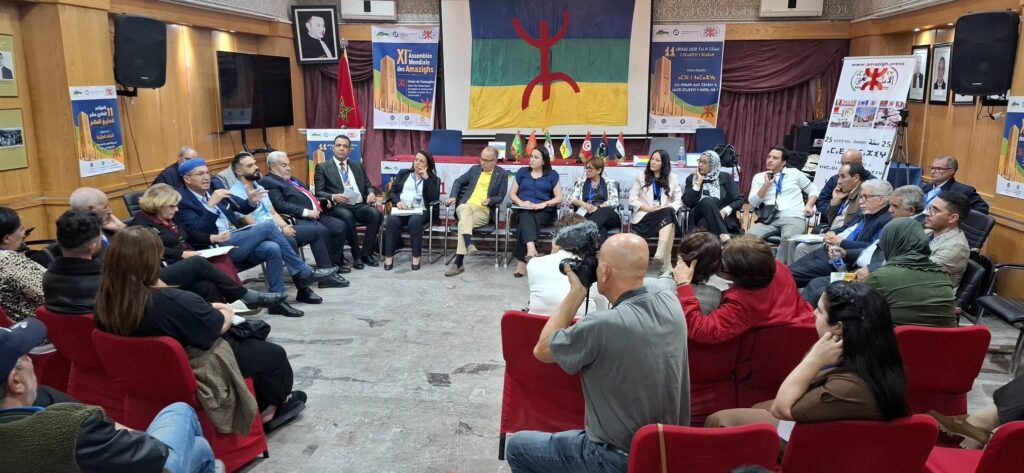
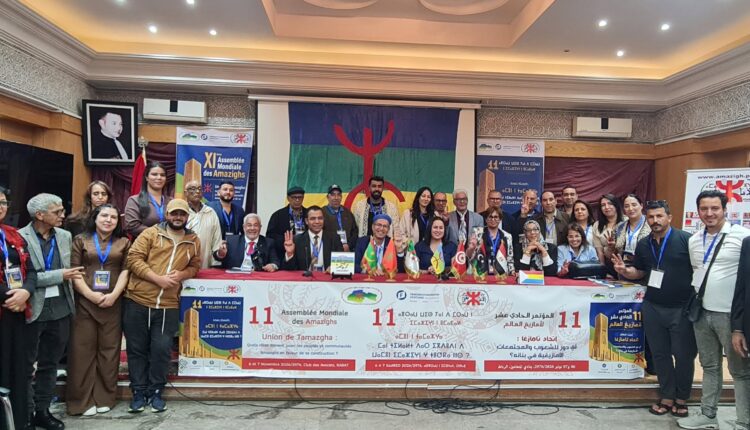
The Amazigh World Assembly held its eleventh General Assembly of the Amazigh people of the world on 6 and 7 November 2026, at the Lawyers’ Club in Rabat, in partnership with the German Friedrich Naumann Foundation for Freedom and the newspaper Le Monde Amazigh, under the theme: “Union of Tamazgha: What roles should Amazigh peoples and communities play in contributing to its construction?”
The gathering was attended by activists, Amazigh figures, representatives of Indigenous peoples of Africa, and delegates from Amazigh associations and NGOs from North African countries, as well as from the European and North American diaspora.
This General Assembly provided an opportunity to assess the situation of the Amazigh language, culture and rights in the various countries of Tamazgha (North Africa) and within the diaspora; to exchange views on ways to strengthen joint Amazigh action; and to explore prospects for building a regional space for cooperation, integration and solidarity, based on respect for human and peoples’ rights, democracy, pluralism, equality and justice.
Following in-depth discussions on the chosen theme, and after taking into consideration national, regional and international contexts, the participants affirm that Amazigh identity constitutes an essential and living historical and civilisational component, as well as a matter of rights and democracy that goes beyond its linguistic and cultural dimensions. It is intrinsically linked to human dignity, equal citizenship, the right to participate in public life, and the preservation of identity and collective memory.
While paying tribute to the struggles of successive generations of Amazigh women and men activists, as well as to the achievements secured through civil society action, human rights advocacy and campaigning, this Eleventh Assembly notes the persistence of imbalances and challenges that hinder the full enjoyment of the linguistic, cultural, political, economic and social rights of Amazigh peoples and communities.
In recognition of its responsibilities in the fields of human rights and civil society action, and aware of the need to move from the recognition of rights in principle to guaranteeing their effective exercise, the World Amazigh Assembly hereby brings the following matters to the attention of national, regional and international public opinion:
First: Building the Union of Tamazgha and strengthening joint Amazigh action
The Amazigh World Assembly considers that building the “UNION OF TAMAZGHA” represents a strategic horizon for cooperation and integration among the Amazigh peoples and communities of North Africa, in a way that strengthens solidarity among them, preserves their linguistic, cultural and social specificities, and supports their shared aspirations for freedom, dignity, development, democracy and justice.
The Amazigh World Assembly stresses that achieving this vision requires collective commitment, the establishment of sustainable coordination and consultation mechanisms, and the development of concrete programmes that go beyond occasional and circumstantial initiatives. This Union must be founded on the principles of equality, mutual respect and solidarity and must never become an instrument of domination, exclusion or the undermining of the rights of any people or component.
To this end, the Amazigh World Assembly calls for:
- Strengthening coordination among Amazigh organisations, associations and stakeholders in the various countries of Tamazgha and within the diaspora, and establishing regular mechanisms for dialogue and the exchange of experiences.
- Developing a common platform for cross-border Amazigh action, based on democracy, human rights, pluralism, equality, and the rejection of violence and exclusion.
- Developing cooperation in the fields of education, scientific research, translation, publishing, media, culture and the economy, in order to contribute to the exchange of knowledge and the development of the Amazigh language in its different linguistic varieties.
- Documenting Amazigh history, preserving collective memory and tangible and intangible heritage, and combating marginalisation, distortion and falsification.
- Encouraging joint initiatives that provide young people, women, researchers and creators with broader opportunities for participation and communication.
- Strengthening the presence of the Amazigh cause within regional and international bodies, and expanding cooperation with human rights organisations, cultural institutions and organisations concerned with the rights of Indigenous peoples and linguistic rights.
The World Amazigh Assembly emphasises that the “Union of Tamazgha” is a project of solidarity and integration among peoples and communities that respects their free will and specificities, and makes diversity a source of strength, cooperation and peace.
Morocco
The Amazigh World Assembly calls for accelerating the implementation of the official status of the Amazigh language, extending its teaching to all levels, and strengthening its presence in institutions and public spaces, considering this a constitutional and legal commitment. It calls on the new government and public institutions to establish a clear national and regional plan, backed by financial and human resources, to ensure the integration of the Amazigh language into the various areas of public life, particularly education, training, administration, justice, the media, culture, creative activities and public services.
In the field of education, the Amazigh World Assembly has emphasised the importance of extending Amazigh language teaching to all educational levels, from preschool through secondary education, while strengthening the training of specialised teachers, increasing the number of positions allocated to its teaching, and developing the curricula and educational tools used in its learning.
It has also stressed the need to expand Amazigh studies programmes at universities, support scientific research and academic training in this field, and strengthen the teaching of the Amazigh language and culture for the benefit of children from the Moroccan community residing abroad.
The Assembly has also called for guaranteeing Amazigh linguistic rights within the judicial system by training judges and other justice professionals and enabling them to communicate in the Amazigh language; integrating the language into the various stages of judicial proceedings; and translating and drafting legal texts and key official documents in Amazigh, in order to ensure equality before the law and equal access to justice.
In the fields of media, administration and public services, the Amazigh World Assembly has called for strengthening the presence of the Amazigh language in public media and in the print and digital press; integrating it into administrative documents, websites, signage and public facilities; providing qualified human resources; and establishing effective monitoring, evaluation and accountability mechanisms, in order to ensure the effective implementation of constitutional and legal commitments relating to the activation of the official status of the Amazigh language.
Second: The situation of Amazigh peoples and communities in the countries of Tamazgha and within the diaspora
The Amazigh World Assembly renews its solidarity with Amazigh peoples and communities in the various countries of Tamazgha and beyond, and affirms that the constitutional or legal recognition of the Amazigh language cannot achieve its purpose unless it is accompanied by effective guarantees of linguistic, cultural, social, economic and political rights, as well as freedom of expression, association and participation in the management of public affairs.
In this context, the Amazigh World Assembly expresses the following positions and demands:
1. Algeria
The Amazigh World Assembly deeply regrets the absence of the Algerian delegation, due to the Algerian authorities’ obsessive determination to maintain the closure of the land and air borders between Algeria and Morocco.
The Amazigh World Assembly expresses deep concern over the continued restrictions targeting activists in the Amazigh movement and the freedoms relating to expression, association and the display of Amazigh symbols.
It calls on the Algerian authorities to:
- Guarantee freedom of expression, association and peaceful assembly, and put an end to restrictions targeting activists and defenders of linguistic and cultural rights.
- Release political detainees held because of their peaceful activities, and review prosecutions related to the exercise of fundamental rights and freedoms, while guaranteeing the right to a fair trial.
- Respect the right of individuals and groups to express their Amazigh identity and use its symbols within the framework of public freedoms.
- Implement the constitutional recognition of the Amazigh language by extending its teaching and strengthening its presence in the media, administration and public life.
- Protect Amazigh memory and culture, respect international human rights commitments, and open a serious dialogue with Amazigh stakeholders.
2. Libya
The Amazigh World Assembly expresses its concern over the marginalisation of the Amazigh people in political and constitutional processes, and the absence of guarantees ensuring their fair participation in negotiations and national dialogue concerning the future of the country.
To this end, it calls for:
- Guaranteeing the effective participation of Amazigh people and representatives of their regions in political and constitutional processes.
- Constitutionally recognising the Amazigh language as an official national language and guaranteeing its protection, development and use in education, the media and administration.
- Including linguistic and cultural rights in any political or constitutional settlement and ensuring that they are not made subject to circumstantial compromises.
- Respecting the specificities of Amazigh-speaking regions and the right of their inhabitants to participate democratically in the management of their local affairs.
- Supporting educational, cultural and media initiatives aimed at preserving the Amazigh language and transmitting it to future generations.
3. Tunisia
The Amazigh World Assembly regrets the continued limited institutional recognition of the Amazigh language and culture in Tunisia, despite the deep historical and civilisational roots of the Amazigh people in this country.
It calls on the Tunisian authorities to:
- Constitutionally recognise the Amazigh language and its status as an authentic component of Tunisia’s history and civilisational diversity, and work towards establishing an appropriate legal framework to protect its linguistic and cultural rights.
- Establish programmes for documenting, developing and transmitting the Amazigh language and culture to younger generations.
- Make Amazigh language learning possible and provide the necessary educational resources for this purpose.
- Strengthen the presence of Amazigh culture in the media, cultural programmes and scientific research.
- Protect historical sites and the tangible and intangible heritage associated with Amazigh civilisation, and guarantee freedom of civil and cultural action for associations and concerned stakeholders.
4. Azawad
The Amazigh World Assembly expresses its solidarity with the inhabitants of Azawad, particularly displaced persons, refugees and those affected by the armed conflict. It also expresses its concern over the continuation of violence and attacks that threaten civilians and worsen the humanitarian crisis.
It calls on all parties concerned to:
- Put an end to attacks targeting civilians, respect international humanitarian law, and protect human lives, property and essential infrastructure.
- Ensure the unimpeded delivery of humanitarian aid and guarantee access to food, water, healthcare, education and protection for the most vulnerable groups.
- Engage in political and peaceful dialogue leading to a just and lasting settlement that guarantees the participation of the inhabitants of Azawad in determining the future of their region.
- Support the right of local populations to manage their own affairs, including consideration of forms of autonomy within the framework of a negotiated political settlement, based on the will of the populations and guaranteeing rights and freedoms.
- Protect the Amazigh language, culture and identity of the inhabitants of Azawad, and incorporate their cultural and linguistic rights into any future political agreement.
- Call on the United Nations, the African Union and the European Union to intensify their mediation, diplomatic and humanitarian efforts, support reconciliation and reconstruction, and create the conditions for a safe and voluntary return and a dignified life for displaced persons and refugees.
- Establish effective mechanisms to monitor violations and prosecute those responsible, in order to ensure that impunity does not prevail.
The Amazigh World Assembly affirms that a lasting resolution to the Azawad crisis requires addressing the political and social roots of the conflict, prioritising dialogue and peace, and protecting the rights and dignity of the population.
5. Mauritania
The Amazigh World Assembly commends the efforts of activists and cultural and civil society stakeholders working to highlight the Amazigh roots of Mauritania and defend the preservation of its heritage and rights.
It calls on the Mauritanian authorities to:
- Open a national and institutional debate on the Amazigh component and its historical and civilisational contribution.
- Strengthen the protection of cultural and linguistic diversity and guarantee the rights of people connected to the Amazigh language and culture through a legal framework that enshrines equality.
- Support scientific research, historical documentation and the protection of heritage associated with the Amazigh component.
- Encourage educational, cultural and media initiatives, and guarantee freedom of expression, association and civil society action, without restrictions motivated by the peaceful defence of linguistic and cultural rights.
Third: Amazigh communities in Europe, the Canary Islands, the cities of Ceuta and Melilla, and other countries of the diaspora
The Amazigh World Assembly highlights the essential role of Amazigh communities in preserving the language, culture and collective memory, transmitting them to new generations, and strengthening ties between countries of origin and countries of residence.
It calls on European governments, regional governments and the relevant municipal institutions to:
- Support the teaching of the Amazigh language and culture for children from Amazigh communities, and establish regular programmes and educational resources that take their linguistic diversity into account.
- Support Amazigh associations and cultural centres, encourage partnerships, training and cultural and scientific exchanges.
- Strengthen the presence of Amazigh culture in cultural and media institutions, festivals and programmes aimed at the general public.
- Protect members of Amazigh communities against discrimination, racism and hate speech, and guarantee equality of rights and opportunities.
- Develop cooperation between countries of residence and countries of origin in order to promote the exchange of experiences and educational resources and strengthen cultural ties between younger generations and their communities of origin.
The Amazigh World Assembly considers that protecting the Amazigh language within the diaspora is a shared responsibility that requires guaranteeing cultural and linguistic rights while strengthening participation and positive integration into host societies.
Conclusion
The women and men participating in this Eleventh World Amazigh Assembly, while affirming that Amazigh identity is a matter of rights, dignity and equality, renew their commitment to continuing civil society struggles, defending rights and pursuing advocacy, with the aim of enabling Amazigh peoples and communities to fully enjoy their rights and preserve their language, culture, civilisation and historical memory.
The Amazigh World Assembly affirms that building the “Union of Tamazgha” is inseparable from protecting rights and freedoms, and that its success requires free will, active democratic participation, respect for linguistic pluralism and cultural diversity, as well as commitment to the principles of peace and coexistence and rejection of violence, exclusion and domination.
They also call for moving from recognition in principle to the effective implementation of rights; from scattered initiatives to organised joint action; and from diagnosis to implementation, evaluation and accountability.
The Amazigh World Assembly renews its call to make the construction of the “UNION OF TAMAZGHA” an ambitious democratic project of cooperation, integration and solidarity among Amazigh peoples and communities, founded on freedom, dignity and human rights, and open to all initiatives that serve peace, development, justice, democracy and peaceful coexistence.
It should be noted that the Amazigh World Assembly has renewed its structures by electing a new Confederative Bureau for the 2026–2030 / 2976–2980 term, composed as follows:
- Mr. Rachid Raha, President of the Amazigh World Assembly (AMA);
- Mr. Dr. Mimoun Charqi, Honorary President;
- Ms. Salwa Gharbi, Delegate President for Spain;
- Ms. Amina Ibnou-Cheikh, Delegate President for Morocco;
- Mr. Mohamed Mahmoud Tolba, Delegate President for Mauritania;
- Ms. Touria Abarkani, Secretary-General and Representative in Germany;
- Mr. Aissa Akaoui, Deputy Secretary-General;
- Mr. Mhamed Bihmedn, Treasurer-General and Representative in Belgium;
- Mr. Mohamed Boussaidi, Deputy Treasurer-General;
- Ms. Souad Benkachouh, Delegate President for the Greater Rif;
- Mr. Said Saadaoui, Delegate President for the Greater Atlas and Souss;
- Mr. Ahmed Afkir, Deputy Delegate President for the Greater Atlas and Souss;
- Mr. Badr Malhouf, Delegate President for the Middle Atlas;
- Ms. Bouchra Bachari, Deputy Delegate President for the Middle Atlas.
Long live solidarity among the peoples and communities of Tamazgha!
LONG LIVE TAMAZGHA! TUDERT I TAMAZGHA!
Reportage photos:
https://www.facebook.com/