Excellency Mr. Charaf AHMIMED, Representative and Director of UNESCO for the Maghreb
Subject: “AFRICA” Exhibition, CAN 2025, and the African-Amazigh Identity of Morocco and Tamazgha
Excellency,
We have the honor of extending our sincere congratulations on the occasion of the “AFRICA” exhibition, organized by UNESCO in collaboration with the Foundation for the Preservation of Cultural Heritage in Rabat and the Mohammed VI Foundation for Environmental Protection, entitled “Africa: World Heritage, Journey through Landscapes, Civilizations, and Dreams”, held in conjunction with the 35th edition of the Africa Cup of Nations (CAN 2025), currently taking place in the Kingdom of Morocco.
However, allow me to submit a few observations regarding this exhibition, particularly the fact that the main poster and explanatory panels are exclusively in Arabic, French, and English, while the Amazigh language, an indigenous and deeply African language, and a co-official language in Morocco, is entirely absent.
This omission, undoubtedly unintentional, deeply saddens us, especially since the very etymology of the word “AFRICA” is Amazigh (berber). Originally, this term referred to Tunisia during Roman times before extending to the entire African continent. It is believed to derive from the Amazigh words ifri or ifren, referring to a North African tribe near Carthage, where ifri means “cave.” Some theories also suggest that Africa was the name of an indigenous deity adopted by the Romans.
Moreover, Mr. Patrice Motsepe, President of the Confederation of African Football (CAF), did not hesitate to include the word ⵉⵣⵎ (IZM), written in Tifinagh, at the heart of the official CAN 2025 mascot, meaning “lion,” a symbol of strength, pride, and African unity. He also approved the use of the Amazigh African word itri (“star”) to name the official ball of the competition.
Excellency,
We greatly appreciated the magnificent photographs and commentary presented in this rich and educational exhibition. One of the panels rightly emphasizes that Africa is the cradle of humanity, highlighting the Rift Valley and the Omo Gorges in Ethiopia. However, no visual or explanatory reference is made to the archaeological site of Adrar n Ighud [1], known as “Jbel Irhoud,” considered our common ancestor, Homo Sapiens, dating back 315,000 years. It would have been desirable, at the very least, to display a reproduction of its skull, as was done at the Dubai Expo 2020/2970.
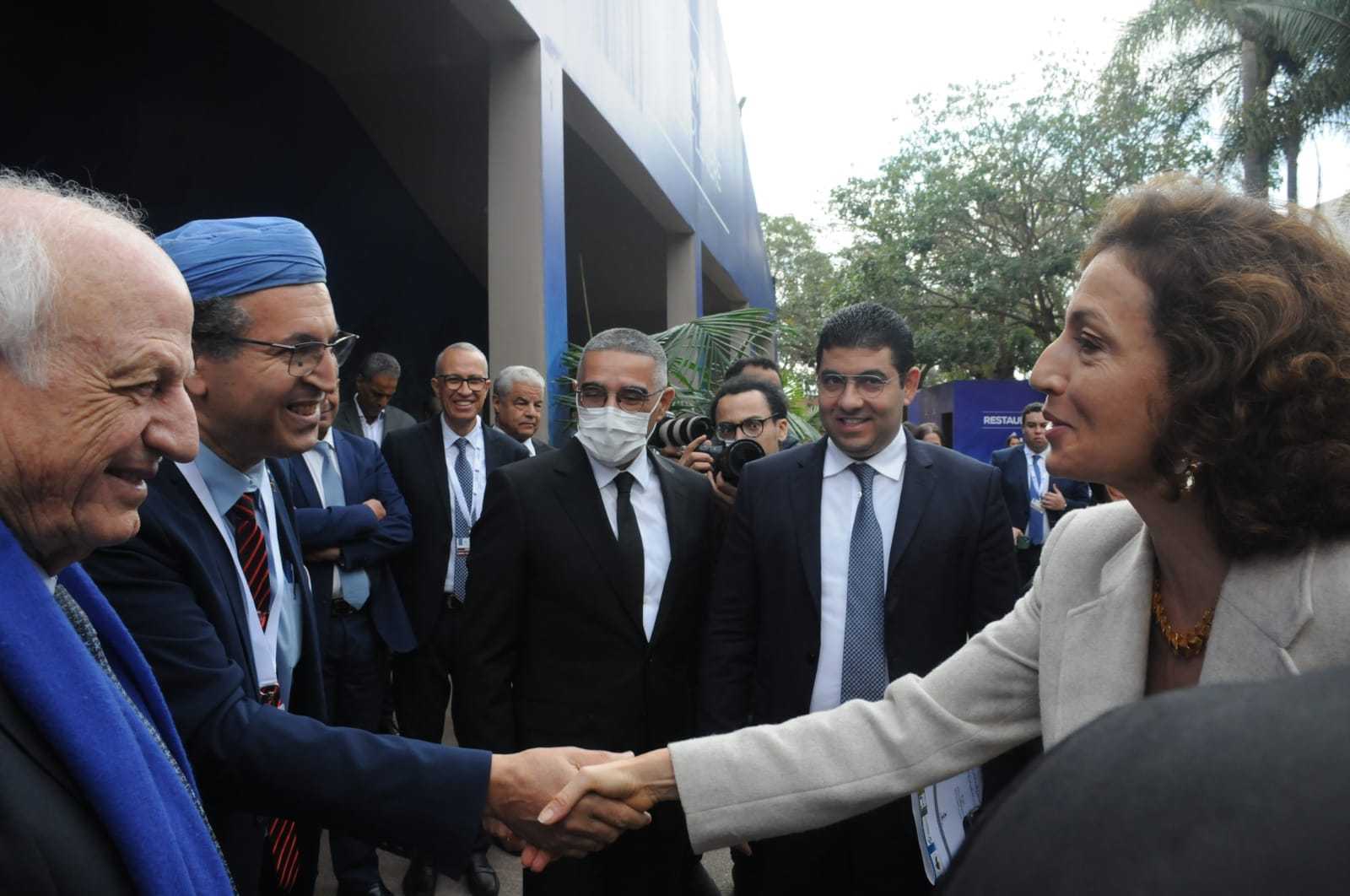
Since this exhibition also addresses the theme of dreams, allow me to share that one of our major aspirations is the recognition of the Adrar n Ighud site as a UNESCO World Heritage site. I personally conveyed this wish in Rabat on November 28, 2022/2972, to Ms. Audrey Azoulay, Director-General of UNESCO, in the presence of Mr. Mohamed Hajoui, Secretary General of the Moroccan Government, Mr. André Azoulay, Advisor to His Majesty the King, and the Minister of Culture, Mr. Mohamed Mehdi Bensaid. At that time, Mr. Bensaid had promised to examine this request. To date, however, no concrete action has been taken, nor has any official dossier been submitted to your institution.
In fact, the “AFRICA” exhibition claims to cover the theme of African civilizations, yet the Amazigh and Pharaonic civilizations [2], both originating from the Greater Sahara, remain largely marginalized, despite being among the greatest pride of African heritage.
In conclusion, we wish to draw your attention to the urgent need for the effective implementation of the official status of the Amazigh language, in accordance with the Constitution of the Kingdom of Morocco and the applicable legislative texts. Moreover, His Majesty King Mohammed VI, on the occasion of the official recognition of the Amazigh New Year on May 3, 2023, affirmed that: “Amazigh, as an essential component of authentic Moroccan identity, enriched by the plurality of its currents, is a common heritage of all Moroccans without exception.”
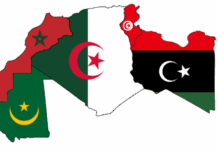
It goes without saying that the Amazigh identity also constitutes a fundamental part of the identity of all Tamazgha (North Africa). In this regard, we respectfully invite you to avoid the use of the term “Arab Maghreb” [3], employed by some of your predecessors, and to correct the discriminatory naming of your Bureau when translated into Arabic as “Bureau of UNESCO within the Arab Maghreb.” It is indeed inconsistent to persist in using terminology with strong ideological connotations that undermine the sensitivity, identity, and dignity of millions of indigenous citizens of our African continent.
Hoping to have captured your full attention and to encourage you to examine these observations with the interest and responsibility they deserve, we kindly ask you, Excellency, to accept the expression of our highest consideration.
On the occasion of the Amazigh New Year 2976, we also have the honor of sending you our best wishes for health, happiness, and full success.
Signed: Rachid RAHA,President of the World Amazigh Assembly (AMA)*
Notes:
[1]- https://www.nature.com/articles/nature22336
[2]- https://rachidraha.com/the-sahara-cradle-of-amazigh-berber-civilization/
(*) https://amamazigh.org/2025/12/amazigh-world-assembly-awa-philosophy-objectives-and-achievements/