Introduction
The Amazigh World Assembly (AWA), known in Amazigh as Agraw Amadlan Amazigh, is one of the leading international non-governmental organizations dedicated to defending the rights of the Amazigh (Berber) people of North Africa. Officially created on December 11, 2011, in Brussels during the Sixth Amazigh World Congress, the AWA is the result of a major restructuring of the Amazigh World Congress (AWC), founded in 1995 (Wikipedia, 2024a; Friedrich Naumann Stiftung, n.d.). This institutional transformation, far from being insignificant, reflects the political maturation of the transnational Amazigh movement and a desire to strengthen the effectiveness of its action on the international stage.
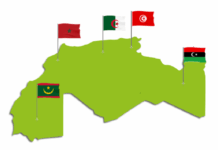
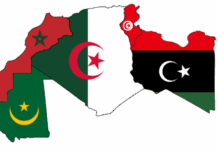
With its headquarters in Belgium to benefit from its proximity to the European institutions and the United Nations, the AWA brings together Amazigh socio-cultural and development associations from the countries of Tamazgha—a term referring to the Amazigh geographical and cultural area covering North Africa from Siwa in Egypt to the Canary Islands (Chtatou, 2022, September 12) — as well as the diaspora in Europe and America (La culture Amazigh, 2013, January). Its action falls within the international legal framework of indigenous peoples’ rights, regularly calling on Maghreb states to fulfill their obligations towards linguistic and cultural minorities.
This essay examines the founding philosophy of the AWA, its strategic objectives, and its main achievements since its creation. It also analyzes the challenges facing the organization and the prospects for the evolution of the transnational Amazigh movement in a Maghreb context marked by profound political and social transformations.
- Genesis and Philosophy of the Amazigh World Assembly
1.1 From the Amazigh World Congress to the Assembly: A Strategic Evolution
The Amazigh World Congress (AWC) was created on September 1, 2, and 3, 1995, in Saint-Rome-de-Dolan (France) during a pre-congress meeting attended by about 100 delegates from Amazigh associations in North Africa, Europe, and America (Wikipedia, 2024b; Wikimonde, n.d.). This historic initiative responded to the Amazigh people’s desire “to establish an international coordination and representation structure that is independent of states and political parties” (Amazigh World Congress, n.d.). The AWC organized seven triennial general congresses between 1997 (Tafira, Canary Islands) and 2015 (Agadir, Morocco), gradually structuring the transnational Amazigh movement.
However, internal differences gradually emerged, particularly regarding the national rotation of presidents and term limits (Wikipedia, 2024b). Between 2008 and 2011, two organizations simultaneously claimed legitimacy for the AWC: one led by Belkacem Lounès (Algerian-French dual national), the other by Rachid Raha (Moroccan-Spanish dual national) (Wikipedia, 2024a). This split, although damaging in the short term, ultimately led to institutional clarification.
In December 2011, the branch led by Rachid Raha decided at the 6th Congress in Brussels “to change its name, revise its statutes, and create a new institution with new structures” (La culture Amazigh, 2013, January). The “dissident” Amazigh World Congress became the Amazigh World Assembly (AWA). This change in name reflected a conceptual evolution: from a structure of periodic congresses to a permanent assembly, better suited to ongoing international advocacy.
1.2 Philosophical and Ideological Foundations
The AWA is based on a political philosophy that articulates several complementary dimensions:
First, it explicitly claims democratic values and universal human rights. Its statutes affirm the “defense, promotion, and development of the values of freedom, equality, tolerance, democracy, and human rights, as well as the fight against all forms of discrimination, exclusion, and marginalization” (Amazigh Culture, 2013). This universalist reference allows the AWA to rely on the international legal framework and legitimize its claims beyond the particularism of identity alone.
Secondly, the AWA defends an indigenous conception of Amazigh identity. It defines the Imazighen as an “indigenous people” within the meaning of UN conventions, i.e. “social groups with a social and cultural identity different from that of the dominant society, which makes them susceptible to disadvantage in the development process.” This legal classification opens up access to specific international protection mechanisms, notably the United Nations Declaration on the Rights of Indigenous Peoples (2007).
Thirdly, the AWA promotes a cross-border and confederal vision of the Amazigh space. The “Tamazgha Manifesto for a Democratic, Social, and Transnational Confederation Based on the Right to Regional Autonomy,” adopted in 2011, proposes a political overhaul of North Africa that respects the specific characteristics of the Amazigh regions (La culture Amazigh, January 2013). This vision, although utopian in the short term, structures the organization’s political horizon and transcends the state frameworks inherited from colonization.
Fourthly, the AWA affirms a secular identity distinct from political Islam. The statutes specify that “Amazigh identity is not defined in relation to a religion, but rather in relation to the moral values of this people (freedom, justice, mutual aid), their land, their history, their civilization, and their language.” This claimed secularism distinguishes the Amazigh movement from the dominant Arab-Muslim identity movements in the Maghreb and facilitates its anchoring in the European political arena.
1.3 Internationalization as a Strategy
The decision to establish the AWA “under the auspices of and in accordance with Belgian law” is part of a strategic logic of “internationalizing the Amazigh question” (La culture Amazigh, January 2013). Belgium, home to the European institutions and located near Geneva (headquarters of the United Nations for Europe), offers “proximity to and protection from international institutions, including those of the European Union” (La culture Amazigh, January 2013).
This internationalization strategy aims to bypass the Maghreb states, which closely control Amazigh political expression on their territories. By positioning itself as an interlocutor with international organizations—the UN, the European Union, the Council of Europe, and the African Union—the AWA seeks to create external pressure on Maghreb governments. This internationalization strategy, based on international conventions on human rights and indigenous peoples, has become central to the Amazigh movement’s repertoire of action.
- Strategic Objectives of the Amazigh World Assembly (AWA)
The AWA’s objectives, as defined in its statutes and demonstrated in its actions, can be organized into four main areas: linguistic and cultural rights, political rights and autonomy, transnational solidarity, and documentation of violations.
2.1 Defense and Promotion of Linguistic and Cultural Rights
The central objective of the AWA concerns “the official recognition of Amazigh identity, culture, and language in the various countries of Tamazgha” (Friedrich Naumann Stiftung, n.d.). This objective is broken down into several concrete demands:
- Constitutionalization and institutionalization of Amazigh as an official language on a par with Arabic in all Maghreb states;
- Generalization of Amazigh language teaching at all levels of education (preschool, primary, secondary, university) with adequate training for teachers;
- Presence of the Amazigh language and culture in public and private audiovisual media;
- Unrestricted acceptance of Amazigh first names in civil registries; and
- Preservation of Amazigh intangible cultural heritage (music, dance, oral traditions, crafts).
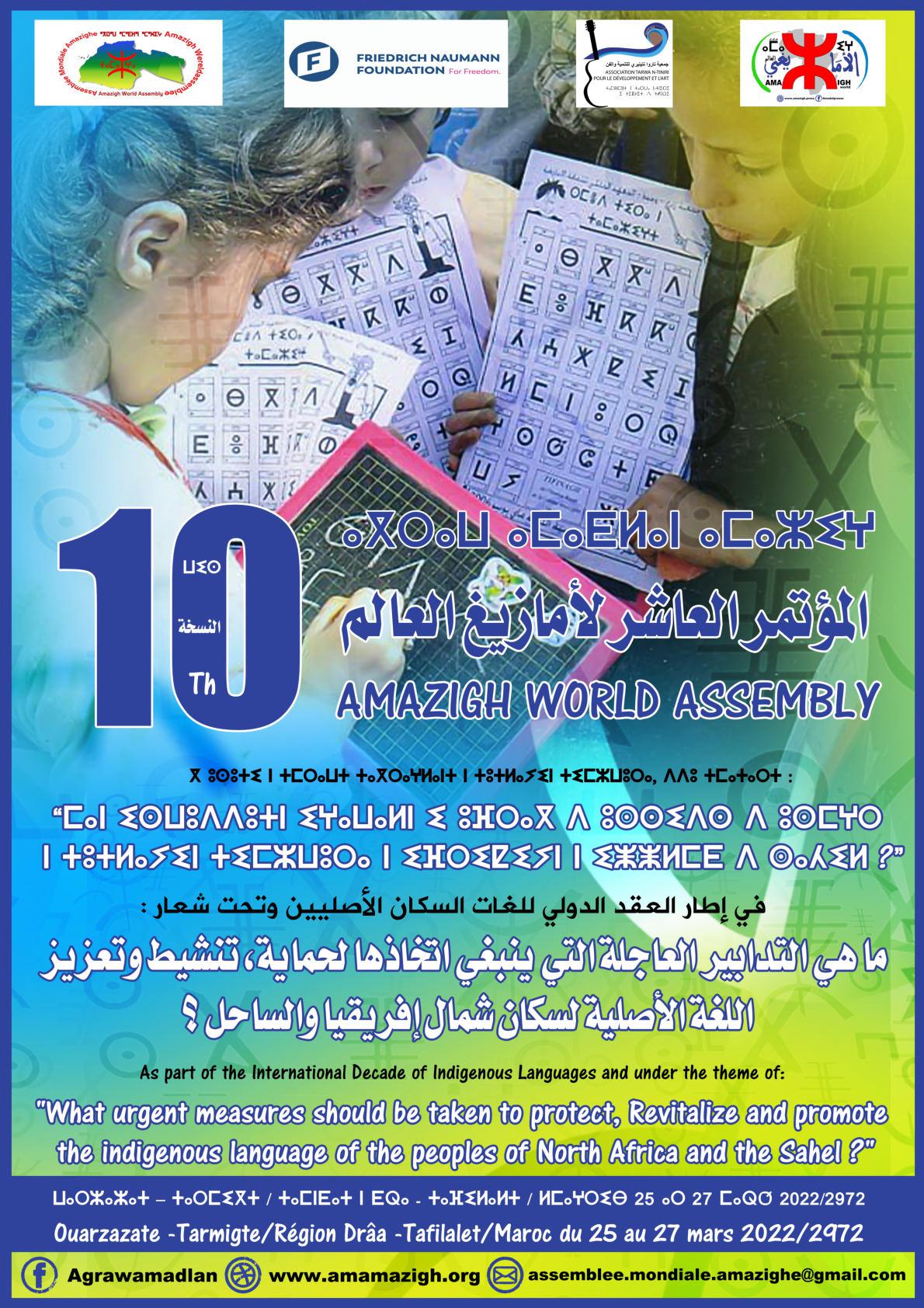
The AWA is explicitly part of the International Decade of Indigenous Languages 2022-2032 proclaimed by UNESCO and the United Nations Permanent Forum on Indigenous Issues (United Nations General Assembly, 2021). Its 10th General Assembly in Ouarzazate in March 2022 was organized under the theme: “What urgent measures should be taken to protect, revitalize, and promote the indigenous language of North Africans ?” (Le Monde Amazigh, 2022; Chtatou, 2022, March 31).
2.2 Defense of the Right to Regional Autonomy
A more radical objective of the AWA concerns “the defense of the principle and right to autonomy for regions, particularly Amazigh regions, and the establishment of democratic institutions throughout Tamazgha” (La culture Amazigh, 2013, January). This demand for regional autonomy, inspired by European models (Catalonia, Scotland, Flanders), remains the most controversial and is firmly rejected by Maghreb states, which see it as a separatist threat.
The AWA advocates for “real decentralization” and “local democratization,” allowing Amazigh populations to manage their regional affairs (education, health, economic development) according to their specific cultural and linguistic characteristics. The Tamazgha Manifesto proposes a “democratic, social, and cross-border confederation” that would transcend current state borders while respecting national sovereignties—an apparently contradictory vision that reveals the movement’s internal tensions between pragmatism and radicalism.
2.3 Transnational Solidarity and Coordination of Struggles
The AWA’s mission is to “coordinate and support the actions and projects of civil society organizations and activists working in the field of defending and promoting the rights of Berbers” (Wikipedia, 2024b). This transnational coordination function aims to overcome the fragmentation of the Amazigh movement, which is divided between countries (Morocco, Algeria, Tunisia, Libya, Mali, Niger) and regions (Rif, Kabylie, Souss, Aurès, etc.).
The organization also intervenes to “defend activists of the Amazigh cause” who are victims of repression. In particular, it has mobilized on behalf of the Hirak prisoners in Morocco’s Rif region (2016-2017), activists from the Movement for the Self-Determination of Kabylie (MAK) in Algeria, and Libyan Amazighs marginalized in the post-Gaddafi political process (La culture Amazigh, 2013, January) and Tuareg Amazighs (Chtatou, 2023, December 9).
2.4 Documentation and Reporting of Violations
The AWA monitors and documents violations of Amazigh rights. It regularly produces alternative reports for UN human rights mechanisms, challenges governments, and raises international public awareness. This international advocacy work is based on partnerships with international NGOs (Amnesty International, Human Rights Watch, Minority Rights Group) and European foundations (Friedrich Naumann Stiftung für die Freiheit).
- Main Achievements of the Amazigh World Assembly
Since its creation in 2011, the AWA has developed several types of actions illustrating its capacity for mobilization and influence, although their concrete impact varies according to national contexts.
3.1 Appeals to International Bodies
The AWA has systematically called on international organizations to address the situation of the Amazigh people. These appeals aim to create diplomatic pressure on Maghreb states by confronting them with their international obligations.
Appeals to the United Nations: In September 2020, the AWA appealed to the United Nations Human Rights Council on “the rights of the Amazigh people in Morocco” (Amadal Amazigh, 2020, September 21), calling for compliance with UN recommendations and the release of Hirak Rif detainees (Wikipedia, 2024a; Le Monde Amazigh, 2020, September 21). This intervention was based on the concluding observations of the UN Committee on Economic, Social and Cultural Rights, which in 2015 recommended that Morocco “adopt the Amazigh language as one of the official languages of the State and redouble its efforts to provide primary, secondary and university education in Amazigh” (Le Monde Amazigh, 2020, September 21).
Letters to the UN Secretary-General: In 2017, the AWA sent a letter to Antonio Guterres, the newly elected UN Secretary-General, asking “the UN to adopt measures to promote respect for the rights of the Amazigh people of North Africa (Tamazgha)” (Amadal Amazigh, 2020, September 21). These official correspondences aim to put the Amazigh issue firmly on the UN agenda.
Interventions with the European Union: The AWA has taken up the mantle of the AWC, which in November 2009 submitted a manifesto to the European Parliament denouncing the “policy of apartheid” suffered by the Berbers of Morocco (Wikipedia, 2024b). Although this provocative terminology has sparked controversy, it illustrates the movement’s strategy of maximum visibility.
3.2 Appeals to Maghreb governments
The AWA regularly and publicly appeals to Maghreb governments, creating internal and international political pressure.
Calls for action in Morocco: In January 2024, the AWA wrote to the Moroccan Minister of Foreign Affairs, lamenting that “more than two months have passed, and your ministry has yet to take any action on these important and necessary UN recommendations” concerning the teaching of Amazigh and cultural rights (Afrik.com, 2024). The organization called for the effective implementation of Organic Law No. 26-16 on the official status of Amazigh, which was passed in 2019 but has been poorly implemented.
Appeals concerning the Rif War: In July 2020, the AWA sent a letter to French President Emmanuel Macron on the 99th anniversary of the Battle of Anoual, drawing his attention to “the great unresolved harm inevitably involving the responsibility of the French Republic in the use of chemical weapons against the civilian populations of the Moroccan Great Rif during the Rif War of 1921-1927” (Wikipedia, 2024a; Chtatou, 2022, March 31). Jean Le Roch, from the President’s Special Staff, replied that “the President of the Republic has received the correspondence” — a diplomatic response avoiding any substantial commitment but demonstrating the AWA’s ability to obtain official responses.
Denunciations of Algerian repression: The AWA regularly denounces “the continued repression of the Movement for the Self-Determination of Kabylie (MAK) and the liquidation of its activists, in addition to the total refusal to respond to its demands” (Amazigh Culture, 2013, January). It calls for “the implementation of a federal system” in Algeria as the only way to guarantee a prosperous future, believing that “the security and repressive option only leads to a deterioration of the situation that threatens the future of the people and the unity of the country” (Le Monde Amazigh, May 10, 2016).
3.3 Organization of General Assemblies and International Forums
The AWA regularly organizes general assemblies bringing together activists, intellectuals, and Amazigh associations from Tamazgha and the diaspora. These events serve as venues for strategic coordination, leadership training, and media visibility.
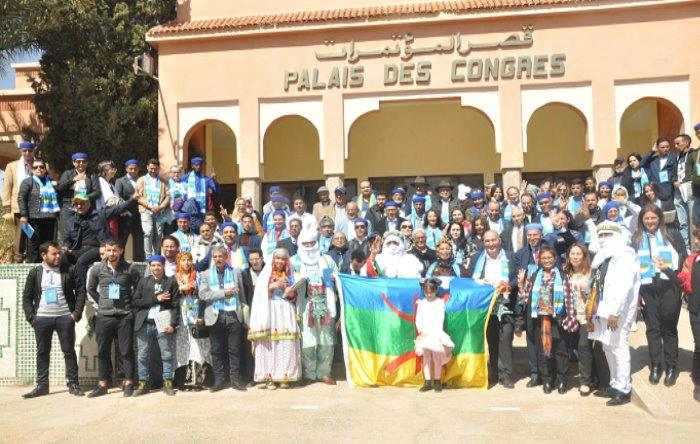
The 10th General Assembly, held in Ouarzazate (Morocco) from March 25 to 27, 2022, brought together delegates from Morocco, Algeria, Tunisia, Libya, the Tuaregs, and the European diaspora, in collaboration with the newspaper Le Monde Amazigh and the Friedrich Naumann Foundation (Le Monde Amazigh, 2022, March 2). This assembly adopted several resolutions calling for, among other things :
- The strengthening of the associative network and the mobilization of pro-Amazigh NGOs and political groups ;
- Solidarity with the Tuareg communities (Imouhar) threatened in Mali and Niger ; and
- Awareness-raising actions by the Amazigh diaspora in Europe and North America so that they are no longer treated as “Arabs from the Gulf” but as “Amazighs from North Africa” (Le Monde Amazigh, 2022, March 2)
Thematic forums organised by the AMA include: the First National Forum of Amazighs of Morocco in Nador (December 2016), the International Forum on Amazigh Rights in Tiznit (April 2017), the Second National Forum of Amazighs of Morocco in Khénifra (June 2-4, 2016) on the theme of: “What is the relationship between the teaching of the Amazigh language and human development?”; the 3rd National Forum of Amazighs of Morocco in Rabat on the theme of: “The implementation of the Amazigh language in the field of justice” (May 31, 2024), and the 4th National Forum of Amazighs of Morocco in Marrakech on the theme “Intellectual property rights and copyright: towards justice for Amazigh artists and actors”. (May 2025), and various academic colloquia on the Amazigh language, history and culture (Friedrich Naumann Stiftung, n.d.).
3.4 Intellectual Production and Awareness Raising
The AWA contributes to intellectual production and awareness raising on Amazigh issues through several channels:
- Publications and press releases: The organization regularly disseminates press releases, reports, and analyses on Amazigh-language portals (Le Monde Amazigh, AmazighWorld).
- Collaboration with the media: Partnerships with audiovisual media for the production of documentaries, notably “La langue de ma mère” (My Mother’s Language) by director Redouane Harbal, broadcast during the 2022 Assembly (Le Monde Amazigh, 2022, March 2).
- Academic interventions: Organization of scientific conferences, such as that of Dr. Mohamed Chtatou (anthropologist and linguist) on the promotion and revitalization of the Amazigh language (Le Monde Amazigh, 2022, March 2, Chtatou, 2022, April 7).
- Limitations, Challenges, and Prospects
Despite these achievements, the AWA faces considerable structural limitations and challenges that relativize its concrete impact.
4.1 Weak Enforcement Capacity
The AWA, like any international NGO, has no power to compel states to act. Its appeals, although visible in the media, are met with indifference or rejection by Maghreb governments. The UN recommendations it invokes remain largely unimplemented, with states invoking their national sovereignty to ignore this external pressure.
4.2 Internal Divisions and Organizational Competition
The Amazigh movement remains fragmented. The 2008-2011 split that gave rise to the AWA did not resolve all tensions. The Amazigh World Congress (Lounès branch) continues to exist in parallel, creating competition for representative legitimacy. National rivalries (particularly between Morocco and Algeria) are replicated within transnational structures, limiting the effectiveness of coordination.
4.3 Repression and Marginalization
In several countries, notably Algeria and Libya, the AWA’s activities are hampered. Activists risk arrest, judicial harassment, and stigmatization as “separatists” or “foreign agents.” This repression limits the organization’s capacity for local action.
4.4 Prospects for Change
The future of the AWA will depend on its ability to overcome these challenges while capitalizing on favorable dynamics: constitutional recognition of Amazigh in Morocco (2011) and Algeria (2016), although imperfectly applied; the emergence of an educated and connected Amazigh youth; and growing sensitivity among international institutions to the rights of indigenous peoples in the context of the 2022-2032 Decade.
Conclusion
The Amazigh World Assembly -AWA- represents an ambitious attempt to build a transnational body to defend the rights of an indigenous people fragmented across several states. Its philosophy combines universal human rights with identity-based particularism, democracy with regional autonomy, local roots with international advocacy.
Its achievements, although limited in terms of concrete impact on state policies, demonstrate an ability to keep the Amazigh issue on the international agenda, to partially coordinate a dispersed movement, and to systematically document violations of linguistic and cultural rights. The AWA functions primarily as an advocacy and awareness-raising organization rather than as a direct agent of change.
The ultimate success of the AWA will be measured by its ability to achieve concrete progress: effective implementation of constitutional provisions recognizing Amazigh, widespread teaching of the language, political representation of Amazigh regions, and recognition of the historical violence suffered (Rif War, post-independence repression). These objectives require profound political transformations in the Maghreb, far beyond the capabilities of a single international organization.
For the time being, the AWA remains a key player in the transnational Amazigh movement, a symbol of the resilience of a thousand-year-old identity in the face of assimilation processes, and the collective voice of a people demanding dignity, equality, and recognition in their own ancestral lands of Tamazgha.
Bibliography
Afrik.com. (2024, 23 janvier). Les Amazighs réclament plus de droits au Maroc. https://www.afrik.com/les-amazighs-reclament-plus-de-droits-au-maroc
Amadal Amazigh. (2020, 21 septembre). L’Assemblée Mondiale Amazighe interpelle le Conseil des droits de l’Homme des Nations Unies sur les droits des Amazighs au Maroc. Le Monde Amazigh. http://amadalamazigh.press.ma/fr/lassemblee-mondiale-amazighe-interpelle-le-conseil-des-droits-de-lhomme-des-nations-unies-sur-les-droits-des-amazighs-au-maroc/
Assemblée Mondiale Amazighe. (n.d.). [Facebook page]. Facebook. https://www.facebook.com/Agrawamadlan/?locale=fr_FR
Chtatou, M. (2020, 12 septembre). Les Imazighens, qui sont-ils et que veulent-ils ? AkalPress.
https://fr.akalpress.com/5550-les-imazighens-qui-sont-ils-et-que-veulent-ils/
Chtatou, M. (2022, 31 mars). Analyse – Les Amazighs du monde se concertent à Ouarzazate. Article19.ma. https://article19.ma/accueil/archives/152532
Chtatou, M. (2022, 7 avril). Promouvoir, protéger et revitaliser la langue amazighe. Le Monde Amazigh.
https://amadalamazigh.press.ma/fr/promouvoir-proteger-et-revitaliser-la-langue-amazighe/
Chtatou, M. (2023, 9 décembre). Le drame politique des Touaregs de l’Azawad. AkalPress. https://fr.akalpress.com/6699-le-drame-politique-des-touaregs-de-lazawad/
Congrès Mondial Amazigh. (n.d.). Le Congrès Mondial Amazigh en bref. https://www.congres-mondial-amazigh.org/cma/
Friedrich Naumann Stiftung. (n.d.). Assemblée Mondiale Amazighe. https://www.freiheit.org/fr/marocco-and-algeria/assemblee-mondiale-amazighe
La culture Amazigh. (2013, janvier). ASSEMBLEE MONDIALE AMAZIGH. https://nezhatamazight.wordpress.com/institutsetablissementmouvement/assemblee-mondiale-amazigh/
Le Monde Amazigh. (2016, 10 mai). L’Assemblée Mondiale Amazighe dénonce la continuation des politiques de ségrégation des états de « Tamazgha» à l’encontre des Amazighs. https://amadalamazigh.press.ma/fr/lassemblee-mondiale-amazighe-denonce-la-continuation-des-politiques-de-segregation-des-etats-de-tamazgha-a-lencontre-des-amazighs/
Le Monde Amazigh. (2020, 21 septembre). L’Assemblée Mondiale Amazighe interpelle le Conseil des droits de l’Homme des Nations Unies sur les droits des Amazighs au Maroc. https://amadalamazigh.press.ma/fr/lassemblee-mondiale-amazighe-interpelle-le-conseil-des-droits-de-lhomme-des-nations-unies-sur-les-droits-des-amazighs-au-maroc/
Le Monde Amazigh. (2022, 2 mars). La 10ème Assemblée Générale des Amazighs du monde à Ouarzazate du 25 au 27 mars 2022/2972. https://amadalamazigh.press.ma/fr/la-10eme-assemblee-generale-des-amazighs-du-monde-a-ouarzazate-du-25-au-27-mars-2022-2972/
Le Monde Amazigh. (2022, 4 avril). COMMUNIQUE FINAL DE LA 10ème ASSEMBLÉE GÉNÉRALE DES AMAZIGHS DU MONDE. https://amadalamazigh.press.ma/fr/communique-final-de-la-10eme-assemblee-generale-des-amazighs-du-monde/
Raha, R. (2022). ¿Qué quieren los IMAZIGHEN? [What do the Imazighen want?]. Concepción RAHA. Éditions AMAZIGH. Imprimeries LAWNE.
United Nations General Assembly. (2007). Déclaration des Nations Unies sur les droits des peuples autochtones. Résolution 61/295. https://www.un.org/development/desa/indigenouspeoples/declaration-on-the-rights-of-indigenous-peoples.html https://www.un.org/development/desa/indigenouspeoples/wp-content/uploads/sites/19/2018/11/UNDRIP_F_web.pdf
United Nations General Assembly. (2021). Resolution A/RES/74/135: International Decade of Indigenous Languages (2022-2032). United Nations Educational, Scientific and Cultural Organization (UNESCO). https://www.unesco.org/en/decades/indigenous-languages
Wikimonde. (n.d.). Congrès mondial amazigh. https://wikimonde.com/article/Congr%C3%A8s_mondial_amazigh
Wikipédia. (2024a, 31 octobre). Assemblée mondiale amazighe. https://fr.wikipedia.org/wiki/Assembl%C3%A9e_mondiale_amazighe
Wikipédia. (2024b, 3 mars). Congrès mondial amazigh. https://fr.wikipedia.org/wiki/Congr%C3%A8s_mondial_amazigh